I thought it might be nice to do a little update on my son’s speech delay and our speech therapy journey since I find so many of these blog posts you read an initial story but never know what happened next and if a child goes on to speak or makes progress.
My son Jude has quite a significant speech delay, which we sought out private speech therapy for back in January/February when he was about 20 months old. At this point, Jude really hadn’t got any words (other than perhaps moo and lots of babble) and wasn’t great at gestures either; only just beginning to point around 18/19 months. He did have a great level of understanding but it still felt very difficult and hard and we sought early help privately after being told he couldn’t be referred for NHS until 2.5 years old.
Jude’s speech delay at 2 years 4 months, 8 months from starting speech therapy
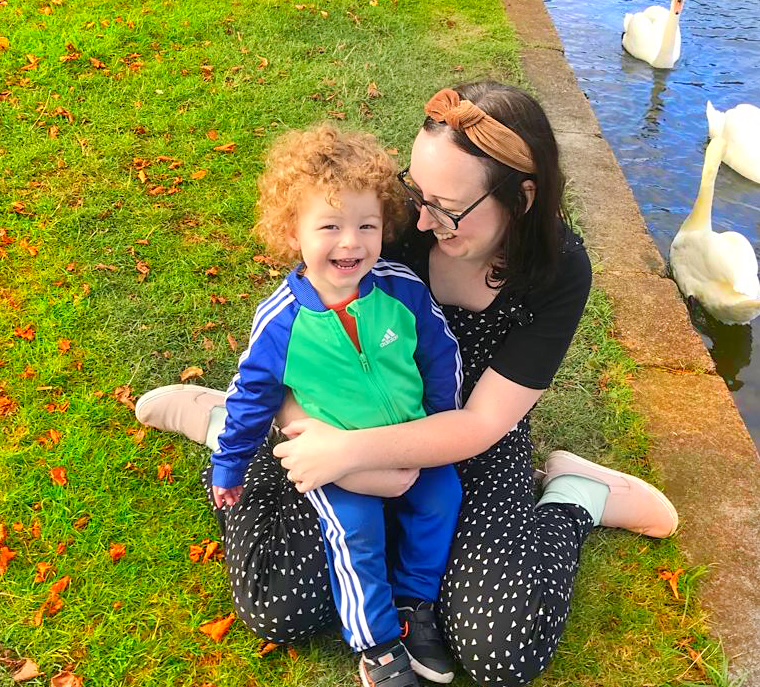
Before we started therapy at around 20/21 months, Jude had very few (if any) consistent words. Before he turned 2, this had improved-he had developed to probably around 7 words on most days (things like mama, teddy, yeah, no more, moo and baba) but wasn’t always using them consistently. He had then and has always had, very good receptive language skills, which basically means how well they understand spoken instruction.
He is now 2 years 4 months and, on good days, he has around 30 words with probably at least another 10-20 he’s attempted once or twice. He can also point to most letters of the alphabet and make the correct letter sound so he can say quite a variety of vowel and consonant sounds compared to only a handful before two, as sounds were quite limited and we were considering something like verbal dyspraxia. Although he struggles with pronunciation, the difference is I can understand him and we can communicate which feels amazing!
Most of these words are labeling nouns-he can say colors (although not super clear-we have ‘yel, blu, urple and so forth); some numbers and label quite a few objects (everything from attempting to say rainbow to ‘bababa’ for banana; Peppa, bing, ball, etc).
Some days are better than others (we’re all down with a cold today so it’s been a quiet one) but much of the above did not come until around 2 years 2 months at least so things can change quickly and we’re hoping it will continue to!
He is still behind speech wise and lacks the ability to put two words together and also doesn’t have as many functional words. His receptive language still seems to be really strong and although he lacks speech, he can still show us he understands things like two and three-part instructions, shapes, colours, and letters. So his lack of speech hasn’t held back his understanding.
The next step is trying to go beyond labeling and using words to have a conversation. So rather than pointing to Peppa in a book, requesting to read Peppa or watch it on tv.
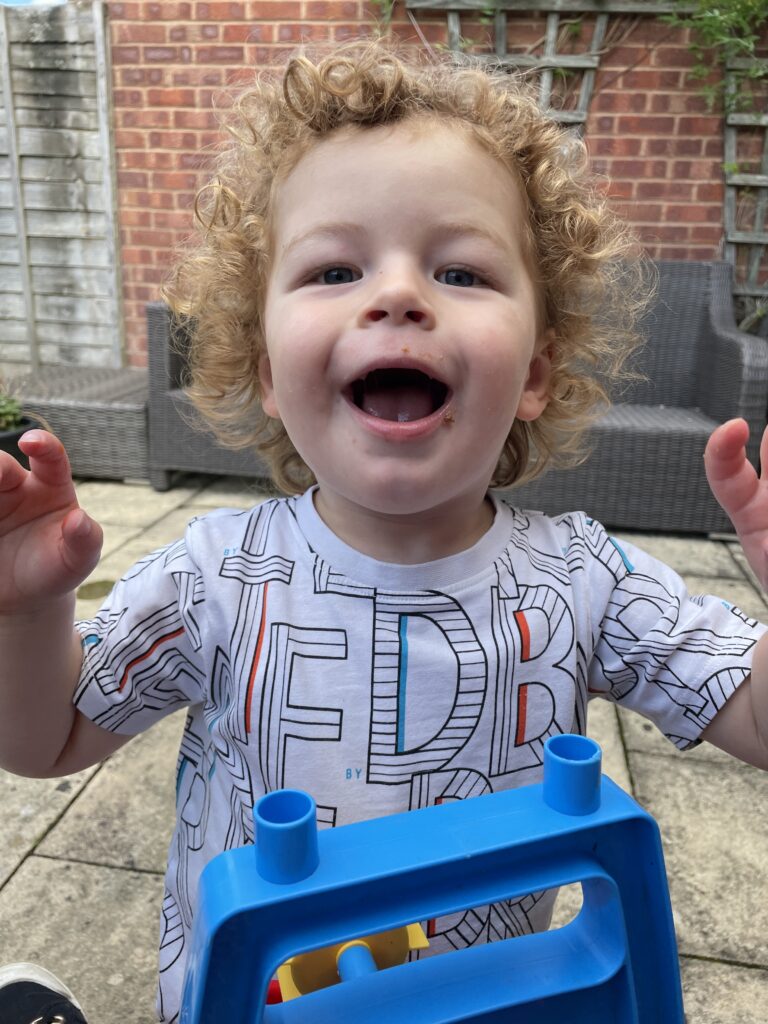
The emergence of answering ‘yeah’ and ‘nah’ sometimes, as well as pointing to things he wants with saying ‘there’ has really helped our day-to-day conversations but he can still revert to babble if he wants something so that’s our next step. He is starting to learn that babble isn’t the right thing however and will often look to you to help him understand how to say the word so he can try to say it.
Another huge step that came around 2-3 months ago was a huge increase in imitation-in both the actions we did and sounds.
I would say Jude’s pronunciation isn’t great and we don’t know if this is something he will need more support with. At the moment he is just diagnosed with general speech delay but this may change if he still struggles with pronunciation later on. For example, banana is ba-ba-ba but is always 3 syllables as opposed to the ‘baba’ for himself and ‘baa baa’ for a sheep. I do have a trained ear! However, I am just happy I can understand him!
Jude’s pre-verbal skills and play
I talked in my first post about working on Jude’s pre-verbal skills too. These are hugely important for speech so I wanted to touch on them. If you have a child with a speech delay, I would really recommend looking into these areas!
These are things like turn-taking, imaginary play, understanding, imitation, attention span, etc. These have come on amazingly and whilst I don’t really have another 2 year old to compare him to, I would say he has closed the gap in these areas.
Turn-taking is a big one and now he will happily hand me a puzzle piece or give me a brick when it’s my turn and do lots of back and forth play. He will quickly copy and his imaginary play is great and he’ll spontaneously pick up his dolly to feed her or walk Peppa up the stairs. Attention span can be a bit tricky if he has lots of toys in a room so we’ve taken steps to help with this (which I’ll talk about in a second).
We have never had concerns about his general social skills and these still continue to be good. Almost everything you read about speech delay is about autism but nobody (including us) has ever thought this is what Jude has. There are hundreds of different conditions that affect speech and because he’s making lots of progress but pronunciation isn’t great, I am thinking it may be a phonological issue, such as apraxia/verbal dyspraxia, but as he gets older and more sounds to emerge, this is less likely. So much about speech delay is really just about waiting and see what happens as things change so quickly.
Things that have helped us with my toddler’s speech delay
We still have fortnightly speech therapy and are still waiting to start NHS therapy properly. We have had one face-to-face session on the NHS before Jude was 2.5 years so I’d encourage you to keep pushing to get seen! However, here’s what we’ve done at home.
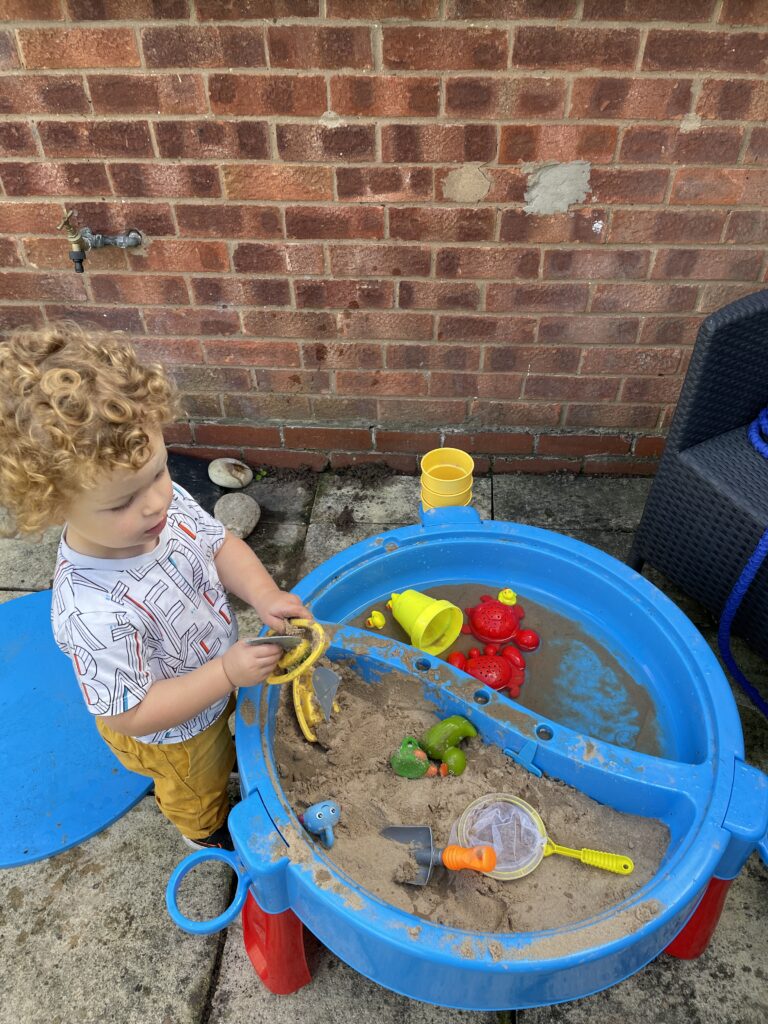
121 Play for an hour each day
Jude’s speech still needs therapy. If you sit with him for an hour, you will get many more words than going to the park. I now make sure we have one hour of 121 me and him on the floor playing with language focuses (rather than running around outside for example) each day. I tend to do this in the morning rather than putting the tv on the first thing like I used to. Then I don’t stress if we’re out in the afternoon. Jude also still has fortnightly therapy.
Playing properly
I focus on books and other toys; see my speech delay toy guide: The best toys and books to help a toddler with speech delay help speech. I’ve learned to adapt what he loves too-so if it’s bricks and puzzles he wants to play, we have to play together and we take a turn each to practice turn-taking. I point to the colours and images and label to get language as well as trying to get words in such as ‘more’. I always do lots of books at this time because that really helps his speech: sticker books really help because it’s something we are actively doing together and helps with labeling. The Peppa’s 1000 first word sticker books has literally taught Jude so many words!
Introduce imaginary play to everything
I took a character like Bing or Mr. Tumble and basically took him on our day. So if we went upstairs, we walked him up the stairs. If outside, we pushed him on the slide and car. In the bath, we brushed his hair and teeth. I did this for a week or two until I noticed Jude would often do this with different toys and situations spontaneously. Now I must admit I don’t do it as much as I think Jude *gets* imaginary play now but it was very useful, to begin with. The Peppa Pig Doll House has been great for this and also increasing vocabulary and understanding around actions.
Lots of pauses
Giving space has been the most transformative for Jude’s speech. We started with pausing for him to make eye contact before speaking or acknowledging, then waiting for pointing, then to vocalise and now I pause for him to try again to attempt the word if the first attempt isn’t clear. This works SO well! If he doesn’t know a word, he defaults to babble. So just now I paused rather than labeled the thing he was pointing at (number 7) and he then babbled, I paused again and then he attempted the word properly.
Give choices
Now Jude can say yes and no, we have moved on to questions with a choice; such as ‘jelly or raisins?’. This has definitely got us some words-such as jelly. A few months ago, Jude would have struggled with this but he now is able to make a choice by attempting the word or pointing. A tip we found was to try and do it when there’s a clear obvious choice rather than two things they love equally.
Rotate toys
I have lots of toys in a plastic box and we take them out one at a time. When we finish playing, I say ‘finished’; put that toy away before we get out another one. I have noticed if someone comes over with lots of toys; Jude’s attention flits, he is overwhelmed and his speech is not great. When I take toys one at a time (and keep some hidden upstairs to rotate) his attention span is much much better.
Keep track of attempts
I keep a track of word attempts on my phone. It is helpful because you can see attempts emerge and practice those that you think are coming and spend a bit of time on them.
Apps
Our speech therapist suggested using apps that you can add language into is as you play-these are Pogg, Toca Monster, and Peekaboo Barn. They’re very simple and designed to be played with together.
We’ve definitely still got a long way to go but I’m really proud of the progress Jude has made-I’d love to hear your speech therapy journeys too!
2 comments