Words: Joanne Jones
For YEARS I was a stressed out, frustrated speech and language therapist and in fact, I hated my job and was actually a little ashamed to be a speech therapist. You see, I knew what I was doing wasn’t working and I wasn’t helping parents and was often leaving them feeling more frustrated than before they saw me.
Something had to change.
I left my post and decided to work online to set up a speech and language therapy service to be proud of.
I spent 18 months thinking, talking to parents, listening to their concerns, and developing something that would empower them, reduce their frustration, create a strong connection with their children and not overwhelm them.
I have learned more in the last 3 years than I learned over the previous 19 years and from it, something really special has emerged.
The Can-Do Approach. It is actually is magic, and I want to share with you the special ingredients that make it so.
If you are worried about your child’s communication, or you want to establish a closer communicative relationship with your child, this is for you.
I am going to let you in on the two most important things I have learned that will make the biggest difference for you and your child.
1. Leave airspace for them to speak.
The first is that you need to leave airspace® for them. What do I mean by airspace? The best way to describe it is imagine a big speech bubble between you and your child when you are together. Think cartoon characters wth a speech bubble between them, waiting to be filled. Only one of you can fill that bubble at a time.
The problem is as adults, parents (especially parents of children with speech and language difficulties) we feel a responsibility to fill that speech bubble. We think that filling it means we are connecting, teaching and helping. If we are not busy filling it, we feel a bit guilty and uncomfortable.
Here’s the thing, as you are busy doing your best and filling the bubble, your child doesn’t get the time or space to fill it. Don’t get me wrong, we may ask a question, leave a small gap, or ask them to say something. But we don’t just leave it open, floating there and waiting for our child to fill it.
BUT when we do, when we wait and leave the bubble hanging magic starts to happen. Children come forward and fill the bubble, with gestures and body language at first, but then sounds and words, and later their worries, their hopes and their fears.
By stopping teaching and starting waiting a connection is formed, children gain confidence and find their voices. We build deeper relationships and more open communication.
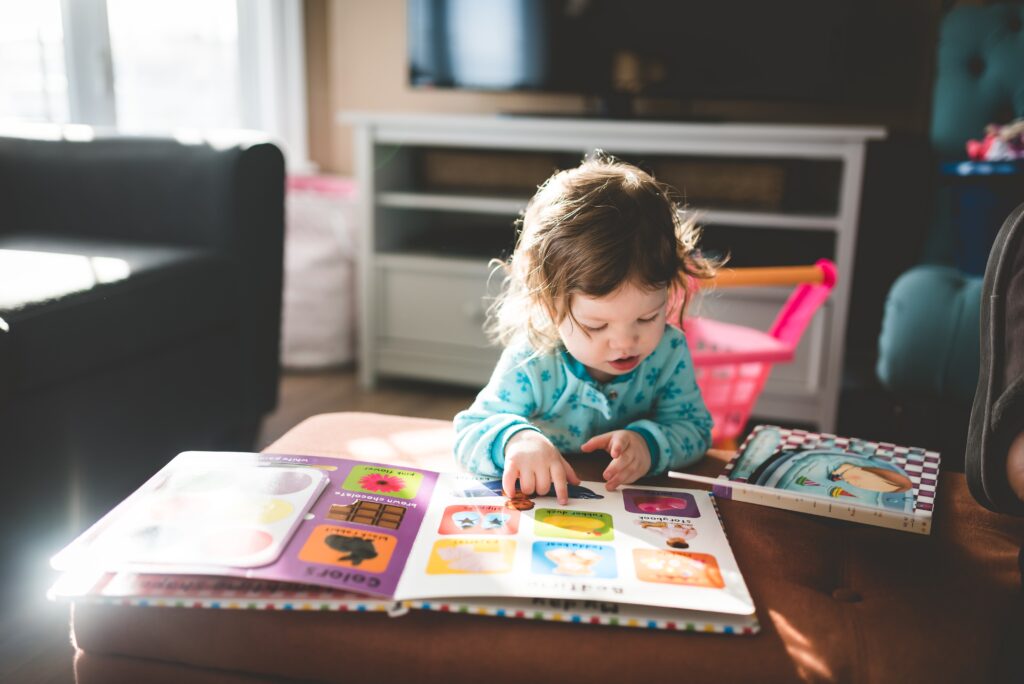
Find what they love
The second key I have found is doing more of what they love and more of what they are good at. This is particularly true of children who are not finding development easy or those who are a little reluctant.
I use the analogy of pizza dough for this one. I know a little left field but bear with me! When you make pizza, you knead the dough and then stretch it from the middle out. You get in amongst it and slowly stretch the dough outwards. You don’t pinch a bit and drag it outwards. You knead and stretch from the inside.
So how does that relate to communication and development? Well what I have found is that when you want to help a child with their communication (and have since applied this to other areas of development) if you get in among where they are right now and gently stretch them to the next steps it is MUCH easier, more effective and way more fun, then standing with a goal and pulling the child towards where you want them to be.
Play is a good example of this. If a child only loves cars, won’t look at anything but cars, it is all about cars, cars, cars. Then you are told, that they must play with ‘imaginative toys’ and so you go out and buy a tea set and a teddy. That is the equivalent of standing with a goal and pulling the child to you.
The magical way is to play with cars, do more cars, and find little ways to stretch the car play, make some ramps, or a tunnel, add a train or petrol pump, make different roads with sand, mud or cereals, add people or animals, take them to the park, or build a mini garage. Soon the goal of imagination has been achieved by getting in amongst it and it was WAY more fun for the child and for you.
So there you have it! I have found the two keys and I am teaching these as part of my programme. I now love being a speech therapist, I am SO proud of my business and I have helped thousands of people across the world to feel super confident, super clear and so hopeful about the future.
Find me @candospeetherapy
For more posts on speech delay, click here.